
Nantucket Arrest Log Availability
Nantucket Police keeps a daily log under M.G.L. c. 41 § 98F. The department posts no stable online archive with a stated number of days. The sheriff holds no inmates on the island. Barnstable's sheriff handles those bookings, yet that office offers no official archive of Nantucket arrests. So there is no honest way to call a fixed window county government data. That holds for seven-day, weekly, and other spans. The statutory log and a booking file are related but different. A police log is a chronological record of complaints, crimes, and arrests. A booking file can hold a photo, fingerprints, a property inventory, and processing data. A court docket tracks arraignment and later case events. Each record tells only part of the story.
Read Nantucket Arrest Entries
Work backward from a narrow window of days. Keep the incident date apart from an article's publication date and from any court appearance. A weekend arrest may surface in print several days later.
- Set an exact date range and identify the Nantucket location or incident if known.
- Ask Nantucket Police to inspect or provide releasable daily-log entries for that range.
- Use the Nantucket JustFOIA portal when a copy or detailed arrest record is needed.
- Compare local coverage only after checking the official route, and note its publication date.
- Use Nantucket District Court for case status or Barnstable Sheriff for mainland county custody.
State law moves protected categories into a nonpublic log. Juvenile, domestic violence, sexual assault, protective-order, and incapacitated-person matters all sit there. A missing entry can reflect that legal shield rather than a quiet day.
Nantucket Arrest-Log Fields
No online Nantucket template promises fixed columns. Treat this inventory as a guide to what an arrest record response may hold, since not every field appears in each public reply.
| Field | How to read it |
|---|---|
| Date and approximate time | The event time, distinct from booking and publication. |
| Name and address | Adult details may be public unless an exclusion applies. |
| Agency and location | Shows who created the record and where to ask for more. |
| Alleged offense | A charge is not a conviction or final disposition. |
| Incident or booking number | A useful identifier for later agency and court inquiries. |
| Photo, bail, or custody | Not verified as web fields; confirm with the proper custodian. |
A name in a Nantucket police entry tells you little about custody. The person may have been cited and released, arraigned, or sent on to Barnstable. Other paths include a transfer to Massachusetts DOC or a move into federal or immigration proceedings.
Nantucket Blotter Versus News
The Nantucket Current police blotter works differently from an official arrest roster. It gathers a selection of reports from one recent week. Names are left out. Each item is just a short summary. What it does offer is a feel for the kinds of calls Nantucket police handled across those days. A logged call, though, is not the same thing as an arrest.

Keep that no-name format separate from a booking record. A custody lookup answers where someone is held. The blotter does neither. News stories are a third thing entirely. Separately published articles may name an offense, an arrest, an arraignment, or bail details, but they run on news value, they change, and extra detail alone does not make a report complete, so weigh them against police and court records in Nantucket County.
Secondary Nantucket Police Reports
Start with the official Nantucket records. Once those are covered, the Nantucket Current crime section collects selected crime and court coverage. Nantucket Now adds a blotter feature drawn from the public call log. Its own notice warns the summary may be incomplete. It may contain errors, and it is not official.

A single dated story proves little on its own. Editorial choices leave gaps no news feed can fill, since editors pick what to print rather than logging every arrest. For another angle, Nantucket Now offers its own take on local police activity.
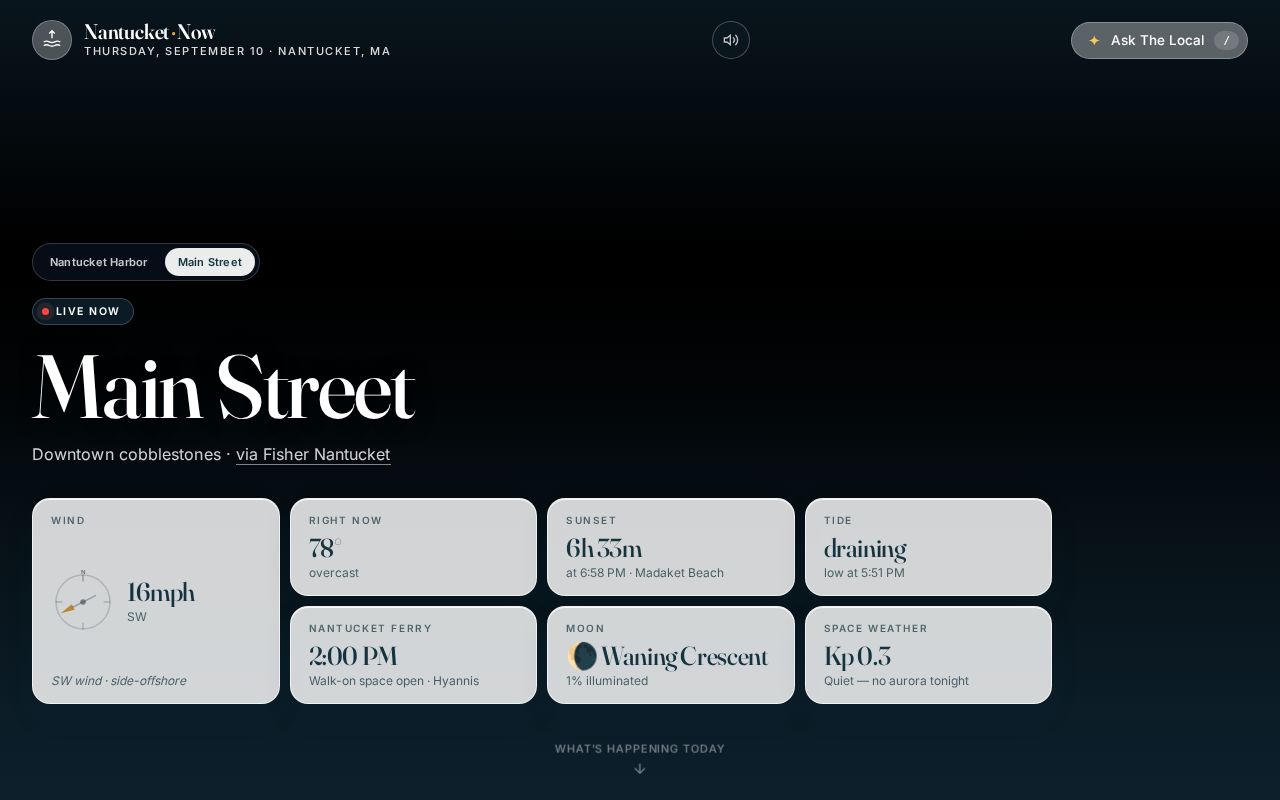
The site itself urges caution. A call-log summary can leave out key details, and not every police call in Nantucket ends with an arrest.
Nantucket Weekend Arrest Timing
No official Nantucket source posts weekend or holiday arrest uploads on a set schedule. Don't assume a Monday report covers Friday through Sunday. Articles often run days late. Records requests follow the public-records clock instead. A story may appear well after the period it describes, while a custodian answers on the town's own timeline, not a news desk's. For a multi-day records request, state the inclusive start and end dates. Ask for daily-log entries. Say whether you also want arrest or booking records. If an incident crossed midnight, name both dates. The Town says a custodian generally responds within ten business days, weekends and holidays excluded, either with the records or an explanation of any delay or denial. That window describes the reply, not when police actually created the record.
Nantucket Arrest Archives and Retention
A missing web archive is not a missing file. Massachusetts keeps police records on a set schedule. The Municipal Records Retention Schedule covers booking sheets, fingerprint cards, vehicle inventories, and other Nantucket arrest material. The relevant category holds files through the end of prosecution and any appeals. Retention, though, is not the same as public access.
Ask the agency that made the record. Nantucket Police holds its own files. County custody records after transport belong with Barnstable Sheriff, so send that office a separate request. Court complaints and dispositions sit with the clerk. Very old material may pass to the Massachusetts Archives, though recent cases stay with the agency or court.
Narrow requests work best. Give a date span and a record type. A demand for every crime document over a broad period invites clarification delays. Named dates from the public daily log are far easier to pull. When a specific arrest is known, add the person's name, the incident location, and any event number. Request the booking sheet or photo separately, because the daily log does not always include either.
The Town generally answers within ten business days. Weekends and holidays do not count. The response either provides records or explains a delay, cost, or denial. State exemptions can shield active investigative material, juvenile records, CORI, and personal data. You may also request segregable portions, meaning the office releases what it can and redacts the rest.
Fresh events move faster. For a new arrest, the Nantucket County arrests last 24 hours route points to live agency confirmation rather than an old news trail.
Note: Ask Barnstable's Records Access Officer which retention rule covers a specific mainland custody record.
Nantucket Arrests and Court Outcomes
A blotter entry never tells the whole story. Arraignment comes next. There the charge is read, and the court may take up release or bail. The complaint can then shrink, be dismissed, continue without a finding, or resolve another way entirely. No photo or first-day article captures that ending.
Nantucket District Court handles the county's cases. Massachusetts limits remote defendant-name searches in criminal matters, and electronic results are not the official court record. A blank online search proves little. Ask the clerk with a case number, a date, and the court location instead of assuming nothing exists.
Treat news archives with the same care. Keep the article's publication date and the dates of the events it describes, since the two often differ. Check whether the outlet later corrected or updated its report. A weekly blotter, a crime story, a daily log, and a court docket each answer a different question. Match them by event date and agency instead of merging details into one unsourced timeline.
A bail figure or first-appearance story is not the case result. Courts change conditions, amend charges, and close cases in ways a first article never records. The clerk's current file holds the answer.
Some events stay off the public log. Massachusetts law keeps juvenile arrests and certain domestic violence, sexual assault, protective-order, and incapacitated-person matters out of it. That gap is a publication limit, not proof that police never came. Fill it with nothing. Neither rumor nor a commercial post belongs there.
Read the annual totals with restraint too. Nantucket's report folds arrests and criminal complaints together in its categories and notes a move to NIBRS reporting. Those numbers give agency context. They cannot show who was booked in a given week or settle any person's outcome.
For each saved entry, keep the covered dates alongside the publication date. That habit exposes delayed posts. It also prevents double-counting the same event.
Public Record Search
Sponsored Results